Building an AI-Native Organization
Introduction
- Simon Guest
- 25+ Years Shipping Software, including:
- 10 Years at Microsoft (Developer Division)
- 4 Years at Amazon (AWS and Transportation)
- 4 Years at SAP Concur (Travel and Expense)
- 3 Years at Neudesic/IBM (Mobile App Development)
- Advisor to Tola Capital (VC Firm in Seattle)
- Former Chief Technology Officer at Code.org
- Adjunct Professor of AI at DigiPen Institute of Technology
Generative AI in the US: Current Trends
- Majority of VC Investment
- IPOs on the horizon: OpenAI, Anthropic, Perplexity
- Three Trends:
- Measuring Productivity of AI Tools
- “Token maxxing” and cost
- “Moat protection” for startups
- Backdrop of Layoffs
Agenda
- Lessons from Microsoft, Amazon, SAP, and IBM
- Team and Organization Design
- “What roles might change?”
- “How do we overcome organizational resistance to AI?”
- Shipping Features
- “Can we ship quicker with AI?”
- “Should we all be vibe coding now?”
- Dealing With Technical Debt
- “Can AI help us reduce this?”
- “How do we avoid creating more with AI?”
Team and Organization Design
Shape of Your Engineering Team
- Every team has a “shape”
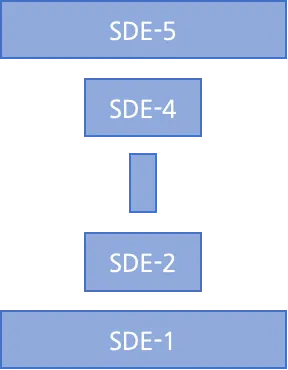
- Ratio of engineers at each level
- Junior SDE-1 through Senior SDE-5
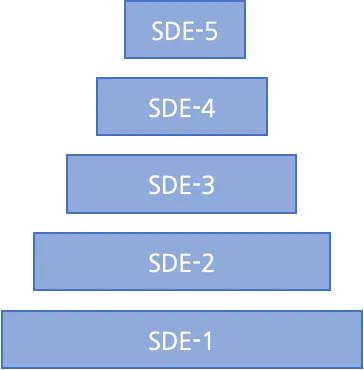
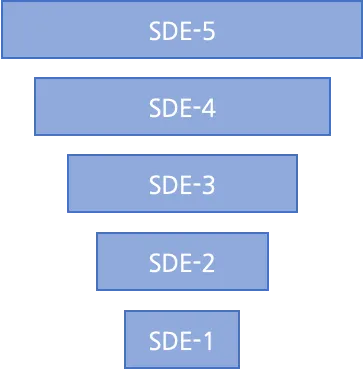
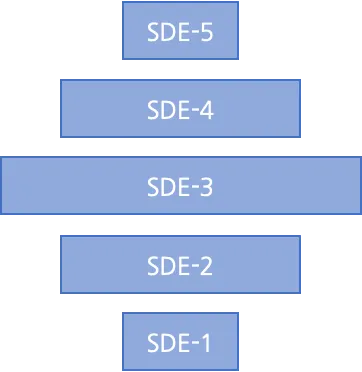
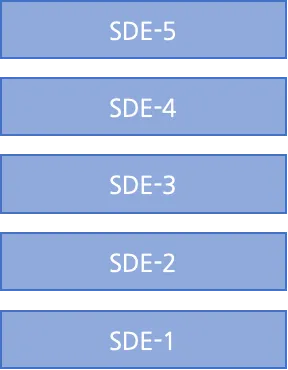
- Five shapes: Triangle, Inverted Triangle, Diamond, Rectangle, and Hourglass
Triangle
- Common in product teams at large organizations (Microsoft, Amazon) who run internship programs
- Well suited for established products with operational load
- Good for mentoring opportunities
- Watch out for burnout at SDE-5
Inverted Triangle
- Less common, but effective for early-stage startups and new product development
- Used this model for building hardware device at Amazon
- Strong team with senior and principal level engineers
- Watch out for gaining consensus given the team’s seniority
Diamond
- Sometimes found in organizations who did college hiring/interships in the past
- I inherited several “diamond-shaped” teams when I started at Code.org
- Can still be effective for well-established products
- Watch out for the width of the diamond - i.e., too many mid-level engineers looking for large projects/promotions
Rectangle
- Often found in small to medium sized organizations
- Good balance of feature development for engineers at all levels
- Steady mentoring opportunities and growth
- Watch out for bringing on too many interns / moving to triangle
Hourglass
- Seniors and Juniors, but few mid-level engineers - sometimes “air-gapped”
- Rare. I’ve only come across one or two in my career.
- Form when inverted triangle team’s move on to v2 of a product and bring on interns for support
- Watch out for disconnects between senior and junior levels in the team
“With AI, Do We Need Junior Engineers?”
- With AI (and layoffs) many organizations have cut back on internships/hiring junior engineers
- Team “shapes” thin out at the bottom, becoming inverted triangles
- What used to be handled by an intern, now required of a SDE-3 = potential job dissat
“With AI, Do We Need Junior Engineers?”
- Yes, we still need junior engineers
- But, their function changes - e.g., no longer doing basic website changes
- And, the expectation of their qualifications increases
- Examples from recent DigiPen graduates
“Should We Create a Dedicated AI Team?”
- Historically, AI (Data Science) has often been a separate team or division
- At Concur, completely separate organizational structure
- “This ship has sailed”
- AI has to be an integral part of each team now
- Training and education of the team is critical to this
Overcoming Resistance to AI
- AI becoming an integral part of the team will often meet resistance
- “I’m concerned about my job security”
- “The quality of Claude Code is not high enough for me”
- “I’m against AI because of safety/environmental/anti big-tech”
- Forcing the issue can be challenging, especially for valued employees with long tenure
- Moving to non-AI projects is only a temporary solution
Overcoming Resistance to AI
- Support engineers with free tools/credits/GPUs - remove the barrier for trying out AI tools
- A monthly stipend can work well
- Identify the champions in the organization
- Often resistance breaks down easier from peers vs. managers
- Create group-based education opportunities
- Internal AI Hackathons can works wonders
Shipping The Right Features
Document-Driven Culture
- Amazon has a unique culture (they call it “peculiar”!)
- One of the traits of the culture is a ban on PowerPoint slides
- Instead, they have a document-driven culture
- Decisions are made with 2 or 6-page documents, printed on paper, and reviewed in silence in meetings
Document-Driven Culture
- A document-driven culture can be very effective:
- Deeper thinking ahead of proposing an idea
- Increased employee engagement through reading vs. listening
- Get input from everyone in the room
- Resolute decision making
- Historical knowledge of decisions
Document-Driven Culture
- Used for everything: 2/6-pagers, PRFAQ, OP1/OP2, Promotion Justifications
- Opinionated vs. seeking consensus
- Writing style is incredibly important
- Explicit reading rituals. No pre-reads. 90-120 mins for 6-pager.
- But, quick decision making vs. follow up meetings.
Document-Driven Culture
- But does this still hold true with AI?…
Prototype-Driven Culture
- Slow-shift towards “prototype-driven culture”
- Instead of a document, a usable product is created/tested
- Also has benefit of immediate customer feedback (play-testing)
- IMO, a combination of both can be very powerful
- A document still holds weight for financial projections, GTM strategy, input from others
So Managers Should Code Now? :)
- Polarizing question, especially at the CTO level
- I’ve struggled with personally for many years
- How can I keep up to date technically by writing code, but not dis-empower my team?
So Managers Should Code Now? :)
- At Microsoft/Amazon, I solved this via an action logic framework
- HBR research from a multi-year survey on leadership styles
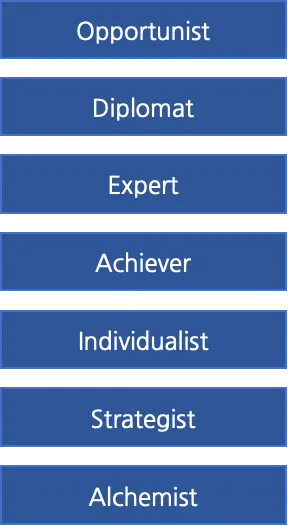
- Seven layers of action logic: How leaders interpret their surroundings and react when their power of safety is challenged
So Managers Should Code Now? :)
- Many managers write code as the expert
- This is their comfort zone, especially if they are newly promoted
- But this always backfires
- Introduces an awkward power dynamic (my manager wrote this, but it’s not very good)
- Often takes away opportunities from engineers
So Managers Should Code Now? :)
- Don’t be the expert!
- The right level to write code at is the strategist
- Use your code to set a vision or direction
- I had an idea how we can solve X. I’ve put together a quick prototype that shows the potential. What do you think?
- If you are successful, the team will adopt the idea
- But probably not use your prototype code - which is fine!
Dealing With Technical Debt
The Curse of Technical Debt
- Everyone has technical debt!
- Can creep in from day 1
- I inherited a team in AWS with a ton of technical debt - and they were only 6 months old!
- What causes it? Seven things
1. Moving Too Quickly
- Valuing speed-to-market beyond anything else
- Shortcuts are taken in the codebase…
- …with a promise to fix them
- …but that never happens
- Often large entanglement in the codebase that makes it difficult to maintain
2. Customer Pivots
- Organizations pivot finding their true customer
- e.g., product designed for doctors actually lands better with young parents
- Product undergoes a pivot to cater for the new audience…
- …but the codebase still has a ton of doctor/healthcare logic in it
- Simple feature requests can come to a crawl: “Can we add a new phone number type for all customers?”
3. Departing Engineers
- Engineers Leave. And they take with them the knowledge of the system
- We ask for handover documentation, but it’s never enough
- Result is a lack of system understanding across the team, leading to slower velocity
- New engineers can be “afraid to touch the code” in case they break it
4. New Engineers (With Differing Experience)
- New engineers join. Congratulations!
- But they have a background/knowledge of a different stack (e.g., Rust/Go vs. Java)
- That’s OK - they’ll pick it up
- Sometimes they do, and it’s great
- But sometimes they don’t - leading to a lack of respect and/or wanting to rewrite in a different tech/language
5. Lack of Documented Technical Direction
- Engineers learn by looking through the code repo/working with others
- And sometimes by reading documentation
- But this is often not enough and/or out of date
- Without this documentation (and direction from it) inconsistencies can creep in
- Different styles, tools, patterns, etc.
6. Technical Decay
- Classic bit rot: Operating systems/frameworks/libraries out of date and never upgraded
- I’ve also seen many forks of open source libraries not kept up to date
- Many can be EOL; no longer supported or patched
- Complex dependency chains
- Engineer attrition (as they want to be working on the latest frameworks, but can’t)
7. Fragile Development Environment
- Few years ago, IDE setups were simple - Windows/IDE/small code base
- Plethora of OS combinations (Mac, Windows, Linux) architectures (x86, ARM), different IDEs (VS Code, Zed)
- Engineers spend valuable time when their environment breaks - and/or helping others
- Can also amplify technical decay as engineers are hesitant to change their own development environment
Can AI Help Reduce Technical Debt?
- Yes!
- Especially with the new models/harness advancements over the past 6-12 months.
- It can be very effective in addressing many of the previous points
- How do we start?
Instrumenting Repos for AI
- Create CLAUDE.md file at the root of your repo
- Describe the repo, folder structure, conventions, and tools (e.g., how to run/test the code)
- Claude Code can help you create this!
- Review, and then add all of the anomalies
- “If you are in this part of the code base do this”
- Add “architectural tenets” into the CLAUDE.md file
- Guardrails for ensuring that coding agents never go off track at the architectural level
Instrumenting Repos for AI
- For large repos, create skills
- SKILL.md file and associated templates
- “Create a new webpage on our marketing site”
- “Create a new customer type in the database”
- Common, complex operations that need precise instructions
Using Coding Agent to Increase Test Coverage
- With CLAUDE.md in place, expand tests and test coverage
- (Coding models are really good at writing tests)
- Create separate skill for running a test
- With expanded tests in place, consider upgrading test framework (Playwright)
Carve Away at the Debt
- “What would it take to upgrade React to v18?”
- “Can you convert the older Radium components to React?”
- “How many components in our customer portal fail to have a11y tags?”
Coding Agent Lifecycle
- Lifecycle: Plan, Act, Test,(Abort), Commit, Clear
Coding Agent Lifecycle
- Plan
- Write the specification for the feature
- Be descriptive, bullet points help
- Ask the agent to validate/question the approach
- “What questions and/or clarifications do you have?”
- Push back on things that seem incorrect
Coding Agent Lifecycle
- Act
- Once happy with the specification, implement
- Watch carefully for file changes/updates
- Correct approach mid-stream
- “I think there’s a 3rd party library for that…”
Coding Agent Lifecycle
- Test
- Test the feature locally / manually
- Build a complete test suite
- (Agents are really good at writing tests)
- Have the agent run it’s own tests after the feature
Coding Agent Lifecycle
- Abort
- Sometimes, things don’t work as expected!
- It can be challenging to fix before exhausting the context window
- And many coding agents will “spin out of control”
git stash, clear context (new session), update the feature spec, and restart
Coding Agent Lifecycle
- Commit
- Before committing to source control, have Claude self-update CLAUDE.md and create skills (if major new functionality)
- Review CLAUDE.md file often
- Auto-compact if approaching ~40K
Coding Agent Lifecycle
- Clear
- Once CLAUDE.md and feature is committed, clear context (
/new in Claude Code)
- Analogy: 50 First Dates movie